If you’re planning a bathroom remodel in Denver and trying to figure out what it’s actually going to cost, the numbers you find online are often too vague to be useful. National averages don’t account for Colorado labor rates, Denver permit requirements, or the reality of working in older homes where a straightforward tile replacement can turn into a subfloor repair once the walls come down.
This guide covers real cost ranges based on bathroom remodel projects in the Denver metro area, what drives those numbers up or down, and what to think about before you sit down with a contractor.
What Does a Bathroom Remodel Cost in Denver?
Bathroom remodel costs in Denver typically fall into three ranges depending on the scope of the project.
A cosmetic update, meaning new fixtures, a vanity swap, fresh tile, and updated lighting without touching the layout or plumbing, generally runs $$18,000 to $25,000 for a standard-size bathroom. This is the right scope if your bathroom is functional but dated and you’re not looking to change how the space is organized.
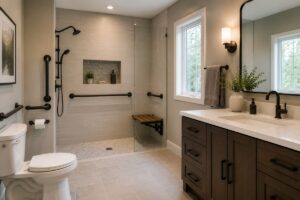
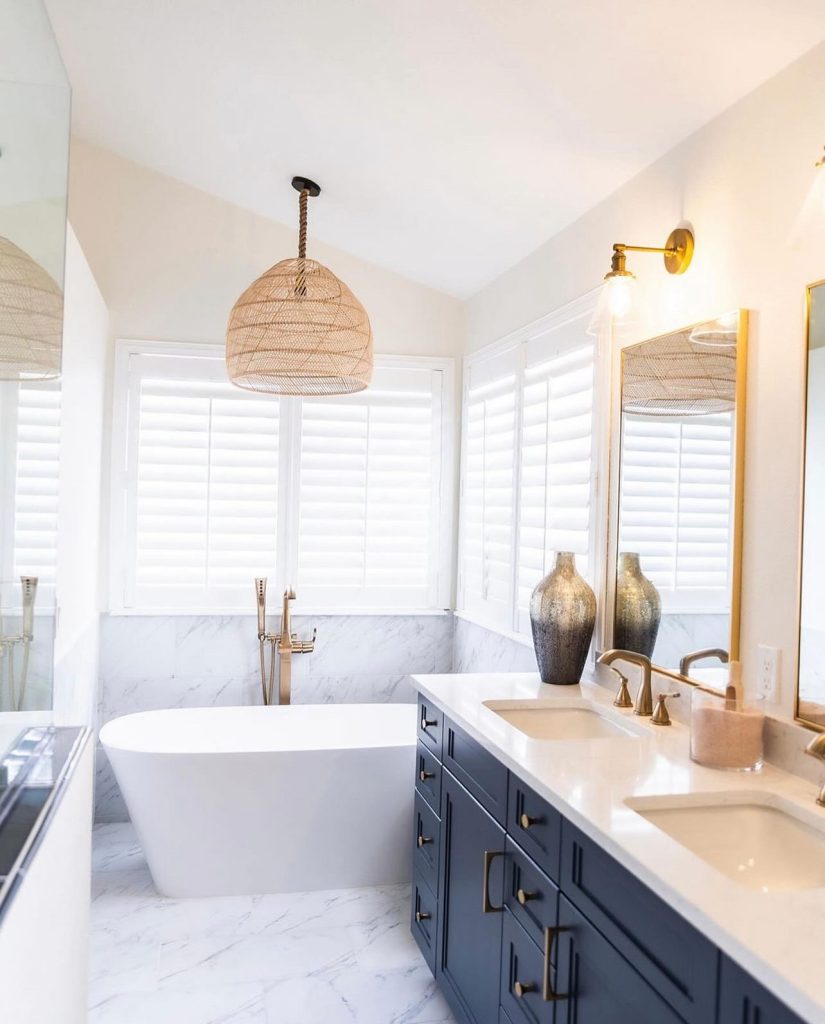
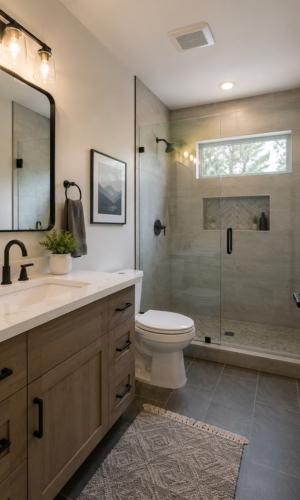
A mid-range remodel that includes new tile throughout, a custom vanity, a shower replacement or tub-to-shower conversion, updated plumbing fixtures, and new lighting typically runs $30,000 to $70,000. This covers the majority of full bathroom renovations in Denver homes, particularly in neighborhoods like Washington Park, Englewood, Platt Park, and Cherry Creek where homeowners are updating mid-century and 1970s-era bathrooms.
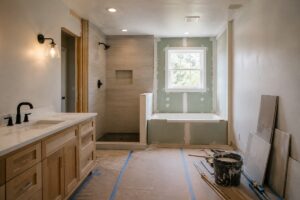
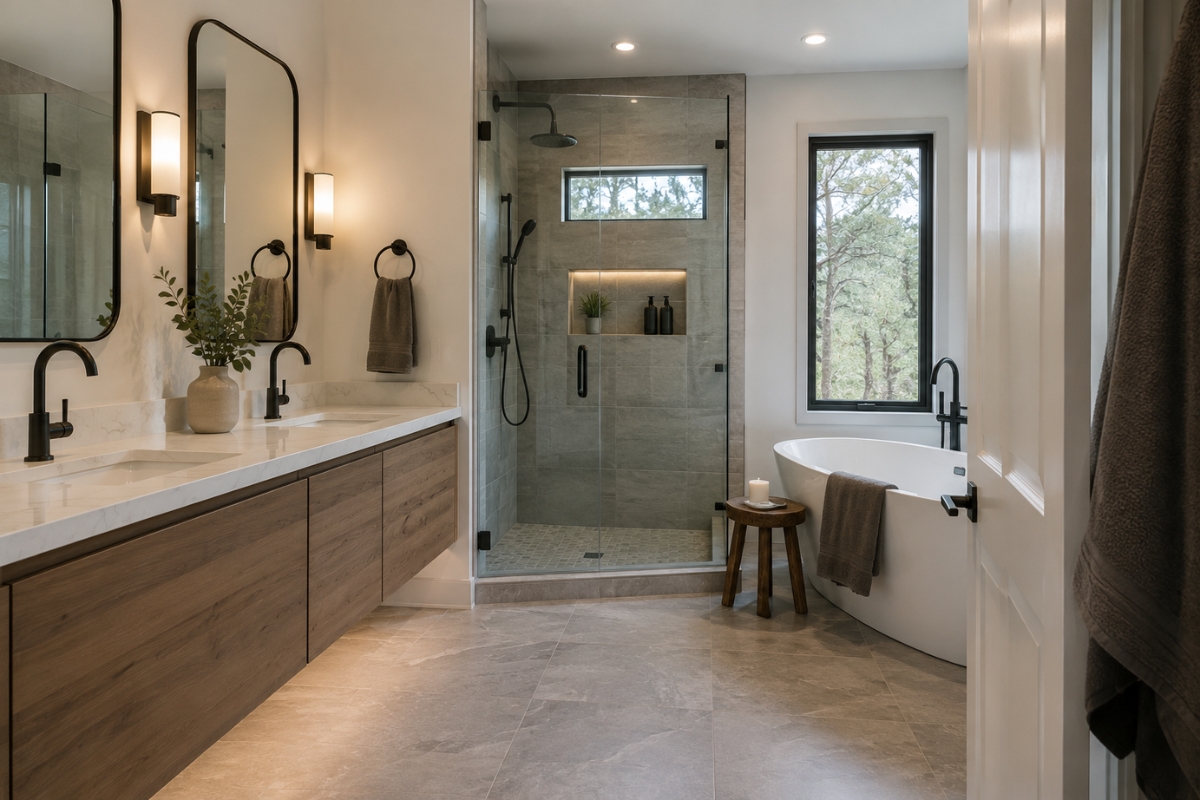
A high-end or full gut remodel, where the bathroom is taken down to studs and rebuilt with a new layout, a large walk-in shower, heated floors, custom cabinetry, and premium fixtures, can run $80,000 to $150,000+ or more. Primary suite bathrooms in this tier typically involve a longer design phase and more material lead time, and they represent a meaningful portion of the bathroom remodeling work our team does across Denver and the surrounding area. You can see what our bathroom remodeling services cover across all three of these project types.
What Drives Bathroom Remodel Costs the Most?
A few decisions have an outsized impact on total project cost, and understanding them early makes budgeting significantly easier.
Tile selection and square footage is often the biggest variable in mid-range bathroom remodels. Large-format tile, natural stone, and handmade or specialty tile all cost more in material and take longer to install than standard ceramic or porcelain. A shower with intricate mosaic detailing can add $3,000 to $8,000 to a project compared to the same shower tiled in a standard field tile.
Plumbing and layout changes are where costs can escalate quickly in older Denver homes. Moving a toilet, relocating a shower drain, or rerouting supply lines adds both labor and time. In homes built before 1980, there’s also a reasonable chance that a remodel will uncover galvanized pipes, outdated drain configurations, or subfloor damage that needs to be addressed before new finishes can go in. None of that is avoidable, but it’s worth building contingency into your budget, typically 10 to 15 percent of the total project cost.
Vanity and fixture selections range from $500 for a basic builder-grade vanity to $5,000 or more for custom cabinetry with integrated lighting, specialty hardware, and a stone countertop. Plumbing fixtures, faucets, shower systems, and accessories follow a similar range. If you’re weighing custom cabinetry against semi-custom options for your vanity, our guide on custom vs. semi-custom cabinets covers how to think through that decision.
Labor is a meaningful part of every bathroom remodel budget in Denver. Tile setters, plumbers, and electricians are in consistent demand across the metro area, and skilled tradespeople book out weeks in advance on larger projects. According to the Bureau of Labor Statistics, construction and extraction occupations in Colorado have seen sustained wage growth over the past several years, which is reflected in current labor rates for remodeling work.
Do You Need a Permit for a Bathroom Remodel in Denver?
Most full bathroom remodels in Denver require at least one permit, and often more than one. The City of Denver requires permits for any work involving plumbing changes, electrical work, or structural modifications. A simple cosmetic update, replacing a vanity light, swapping out a faucet, or retiling a shower with no layout changes, typically doesn’t require a permit. Anything beyond that almost always does.
Pulling permits isn’t just a legal requirement. Permitted work is inspected, which protects you if you sell the home and protects you during the project if something is installed incorrectly. The City and County of Denver’s building permit office has current fee schedules and requirements available online. Our team manages the permitting process as part of every project, so homeowners don’t have to navigate it on their own.
How Does Bathroom Size Affect Cost?
Square footage matters, but it’s not always the most important factor. A small bathroom, say 50 square feet, can cost as much to remodel as a larger one if it involves a full gut, a custom shower, heated floors, and high-end fixtures. The scope of work and material selections drive cost more than raw square footage in most cases.
That said, a full primary suite bathroom at 120 to 150 square feet naturally involves more tile, more fixtures, more labor hours, and a longer project timeline than a 40-square-foot guest bath. For a detailed look at how those timelines play out phase by phase, our bathroom remodel timeline guide walks through planning, material ordering, and construction from start to finish.
What’s the Return on Investment for a Bathroom Remodel in Denver?
Bathroom remodels consistently rank among the home improvement projects with the strongest return at resale. According to Remodeling Magazine’s Cost vs. Value Report, midrange bathroom remodel projects nationally recoup an average of 66 percent of their cost at resale, with higher returns in markets like Denver where buyer expectations for updated bathrooms are strong.
The return varies by neighborhood and price point. In areas like Cherry Creek and Washington Park, buyers purchasing homes in the $800,000 to $1.2 million range expect updated primary bathrooms and will often factor an outdated bathroom into their offer price. A remodeled bathroom in those markets can protect and improve your sale price more than the raw remodel cost would suggest.
Frequently Asked Questions
How long does a bathroom remodel take in Denver?
Most mid-range bathroom remodels take 3 to 6 weeks from the start of construction. A full gut remodel with custom tile work and cabinetry can run 6 to 10 weeks. The planning and design phase, where you finalize the layout, select materials, and order cabinets and fixtures, happens before construction starts and typically takes 4 to 8 weeks depending on how quickly decisions get made and how long material lead times run.
What is the most expensive part of a bathroom remodel?
Tile work and cabinetry tend to be the largest cost items in most bathroom remodels, followed by plumbing fixtures and labor. In high-end remodels, a custom shower with specialty tile, glass enclosure, and a multi-function shower system can represent 30 to 40 percent of the total project budget on its own.
Can I remodel just the shower without doing the whole bathroom?
Yes, and it’s a reasonable approach when the rest of the bathroom is in good shape. A shower-only remodel, including demo, new tile, a new shower pan or linear drain, glass enclosure, and updated fixtures, typically runs $8,000 to $18,000 depending on the size and material selections. The tradeoff is that if you plan to remodel the rest of the bathroom later, you’ll be paying for mobilization and tile work twice.
What should I budget for contingency on a bathroom remodel?
A 10 to 15 percent contingency on top of your project estimate is a reasonable buffer for most Denver bathroom remodels. Older homes in particular, those built before 1980, have a higher likelihood of uncovering issues behind the walls or under the floor once demolition begins. Galvanized pipes, damaged subfloor, and outdated wiring are the most common surprises. Having contingency budget available means those discoveries don’t derail the project.
How far out should I book a bathroom remodel contractor in Denver?
For full bathroom remodels, most reputable contractors in Denver are booked 6 to 12 weeks out, sometimes longer during peak seasons in spring and summer. The design and material selection process takes time on top of that, so if you want construction to start in the fall, starting the planning conversation in summer is not too early.
Getting to a Real Number for Your Project
The most useful thing you can do before budgeting a bathroom remodel is sit down with a designer who can look at your actual space and talk through what the scope of your project realistically involves. Generic cost estimates are a starting point, but they don’t account for your bathroom’s layout, its condition behind the walls, or the specific materials you want to use.
If you’re planning a bathroom remodel in Denver or the surrounding area, our team at Timberline is happy to walk through your project and give you a realistic picture of what it involves. Reach out to schedule a consultation or visit our South Broadway showroom, where you can see tile, fixture, vanity, and cabinetry options in person before making any decisions. You can also learn more about our bathroom remodeling services to get a better sense of the full scope of what we handle.